The poulaine, or how a pointed toe became a matter for Parliament
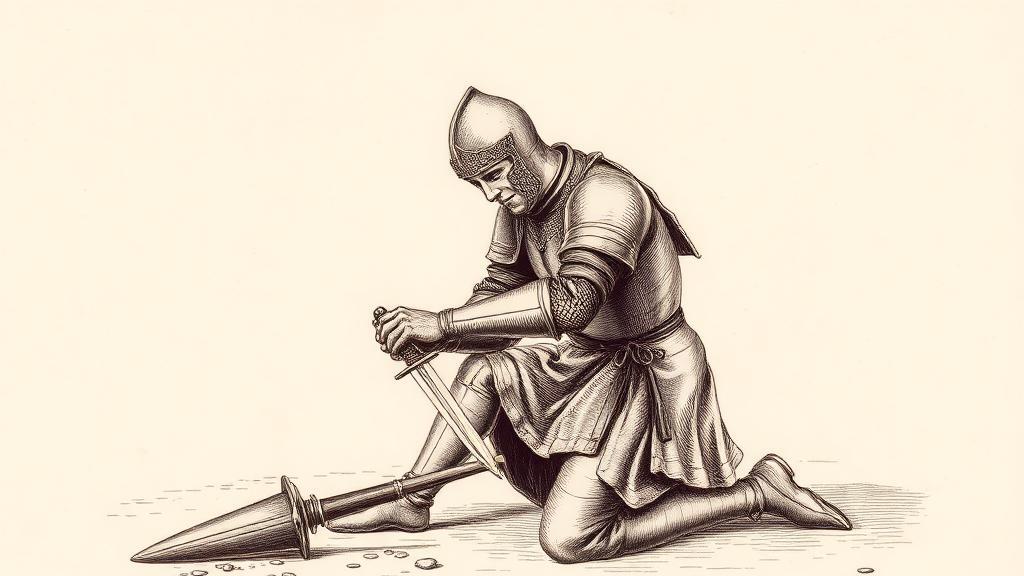
On the afternoon of 9 July 1386, near the village of Sempach in Switzerland, the Habsburg cavalry discovered a design flaw. The knights had dismounted to fight on foot — sensible enough, given the terrain — but their armored sabatons, fashioned in the style of the previous four decades, had pointed steel tips extending several inches past their toes. They couldn’t march. Several, according to Swiss chronicles, had to hack the tips from their own footwear with daggers before the engagement could properly begin. The Swiss infantry won that afternoon. The shoes were not the only reason, but they did not help.
The shoe in question was the poulaine, also known as a crakow after the city of Kraków, where the fashion is believed to have originated around 1340 at the court of Casimir the Great. The name preserves the geography: “poulaine” is a clipping of the Middle French soulers à la poulaine — shoes in the Polish fashion. From Poland the trend moved west with the brisk inevitability of anything that signals you can afford to dress impractically. By 1382, when Richard II married Anne of Bohemia, the English court had taken close notice.
A typical poulaine extended an inch or two past the foot at its most restrained. At its most extravagant — and in fashion, someone always locates the extreme — the pointed tip stretched ten or more inches beyond the toe, packed with moss, horsehair, or wool to hold its shape. For the wealthy, silk or velvet uppers; for everyone else, good leather. Some chroniclers claimed the longest examples required a silver chain attached at the shin for walking, a detail that may be exaggeration from a disapproving monk but is not obviously implausible given the lengths the trend reached.
The Church found the shape offensive on more than structural grounds. Ecclesiastical authorities condemned poulaines as obscene and issued bans against clergy wearing them in 1215, 1281, and 1342 — each decree an implied admission that the previous one had been widely ignored. Secular rulers tried legislation: Charles V of France banned poulaine construction in Paris in 1368; Edward IV of England in 1463 restricted pike length to two inches; London’s cordwainers’ guild followed in 1465 with a prohibition on making any shoe with a point beyond two inches. The fashion’s response, broadly, was to continue.
Archaeology has since confirmed what the skeletons knew at the time. A 2021 Cambridge study examining 177 individuals from four burial sites found that 27 percent of those who lived during the poulaine era showed bunion deformation severe enough to scar bone — compared to 6 percent in the centuries before. At a wealthy friars’ cemetery, the rate reached 43 percent. The same skeletons also broke their arms more often than earlier populations, consistent with what happens when the toe of your shoe is somewhere your foot has not yet arrived.
Poulaines fell abruptly from fashion in the 1480s, replaced by the broad-toed silhouette called the duckbill, and they never substantially returned. What they left behind was a precedent: multiple European crowns had passed laws specifically about the length of a shoe’s toe, graduated by social rank, and enforced by guild ordinance. The poulaine had demonstrated, conclusively enough that governments felt obliged to respond, that a shoe could serve as a statement of position. That idea has proved considerably more durable than the shoe.
Sources
- Poulaine — Wikipedia — Origins in Kraków c. 1340, spread across Europe, etymology, Battle of Sempach, sumptuary legislation, and decline in the 1480s.
- Getting to the Point of Medieval Shoes — V&A Blog — Construction details, extreme lengths, social significance, church opposition, and the fashion shift from pointed to square toes.
- Medieval Europeans’ Obsession With Pointy Shoes Caused Painful Bunions — Smithsonian Magazine — The 2021 Cambridge skeletal study, bunion statistics by era and by burial site, church ban timeline.