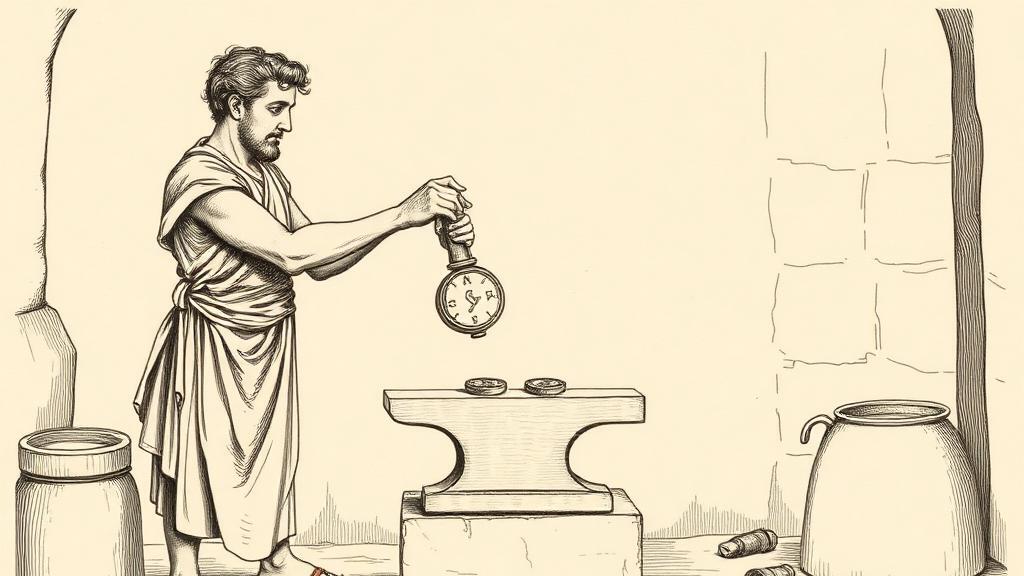
The Byzantine solidus: the gold coin that ran the medieval world
A Viking trader in 9th-century Kiev pulls a coin from his purse — a small disk of gold barely wider than a thumbnail, stamped with an emperor’s face he cannot name in a language he cannot read. He passes it across the counter. The Arab silk merchant on the other side recognizes it instantly. Neither man is Byzantine. The coin is five centuries old. It passes anyway. A solidus is a solidus.
Emperor Constantine I introduced the solidus in 312 CE, the same year he defeated his co-emperor Maxentius at the Milvian Bridge and began consolidating the Roman world. The timing was not accidental. Maxentius had emptied the treasury; the silver denarius had been debased into something that barely pretended to contain silver; prices lurched upward and contracts dissolved into arguments. Constantine needed an anchor, and he found it in gold. He fixed the standard at exactly 72 solidi per Roman pound — about 4.5 grams of nearly pure gold per coin (Wikipedia) — and drew the bullion from a source that was both practically and symbolically convenient: the treasuries of pagan temples, confiscated as Constantine converted to Christianity. One institution’s gods became another institution’s monetary policy.
The name came straight from Latin: solidus meant “solid.” Constantine was not being poetic. The coin weighed 4.5 grams when it was struck in 312 CE; it still weighed 4.5 grams under Justinian I two centuries later; it still weighed roughly 4.5 grams in the late 10th century, a full 680 years on. No currency in Western history would match that record of material honesty. Byzantine mint-masters called it the nomisma — simply “the coin” — as if there were no other kind worth discussing (Britannica).
Across the medieval world, traders treated it accordingly. A 6th-century merchant wrote that “every nation conducts its commerce with their nomisma, which is acceptable in every place from one end of the earth to the other” (World History Encyclopedia). Historians have since dubbed it the dollar of the Middle Ages, which is accurate but undersells the strangeness: the same dollar, physically, for seven centuries. One solidus bought a pig. Three bought a donkey. Fifteen secured a camel. These exchange rates — recorded in Byzantine tax rolls and papyri from Egypt — held with the kind of consistency that modern central bankers would find either inspiring or unsettling.
The coin’s undoing arrived slowly. In the 1040s, emperors began shaving gold from each batch. By the reign of Nikephoros III (1078–1081), the solidus had fallen to 8 carats — a third of its original purity (Wikipedia). The Arab world, which had been calling it the bezant and building the gold dinar partly in its image, noticed the slide long before Constantinople admitted the problem. Emperor Alexios I Komnenos abolished the degraded coin in 1092 and replaced it with the hyperpyron — a fresh start that borrowed the solidus’s blueprint and tried to forget its recent shame.
The word itself refused to retire. French kept sou. Italian kept soldo. Spanish kept sueldo. English, with characteristic indirection, got soldier — a man paid in solid coin. For seven hundred years, a single gold standard had held together trade from Scandinavia to the Silk Road. The money didn’t outlast the empire. The word did.
Sources
- Solidus (coin) — Wikipedia — specifications, etymology, debasement timeline under Nikephoros III, and linguistic descendants.
- Byzantine Coinage — World History Encyclopedia — the 6th-century merchant quote, practical purchasing values (pig, donkey, camel), and trade reach into Scandinavia and the Arab world.
- Solidus — Encyclopaedia Britannica — Constantine’s introduction, longevity as a monetary standard, and dominance of European trade to the 13th century.